Growing with care
Our Common Purpose
As a cooperative of nearly 3,000 grower owners, we’re united with a simple purpose: to deliver the exceptional benefits of almonds to the world. From Almond Breeze® in your coffee to the ingredients found in many loved global brands, we’re committed to bringing you the benefits of almonds for generations to come.
Growing With Care is a practical framework that supports our purpose with a focus on Our People, Our Land, Our Water, and Our Almonds.
Care For Our People
As one of the world’s largest almond companies, we are made up of primarily small, independent family farms, with an average of 100 acres of almond orchards each. Many are third and fourth-generation growers.
We’re helping our people thrive with:
- Profit sharing for our cooperative grower-owners
- Resources and education on farming best practices
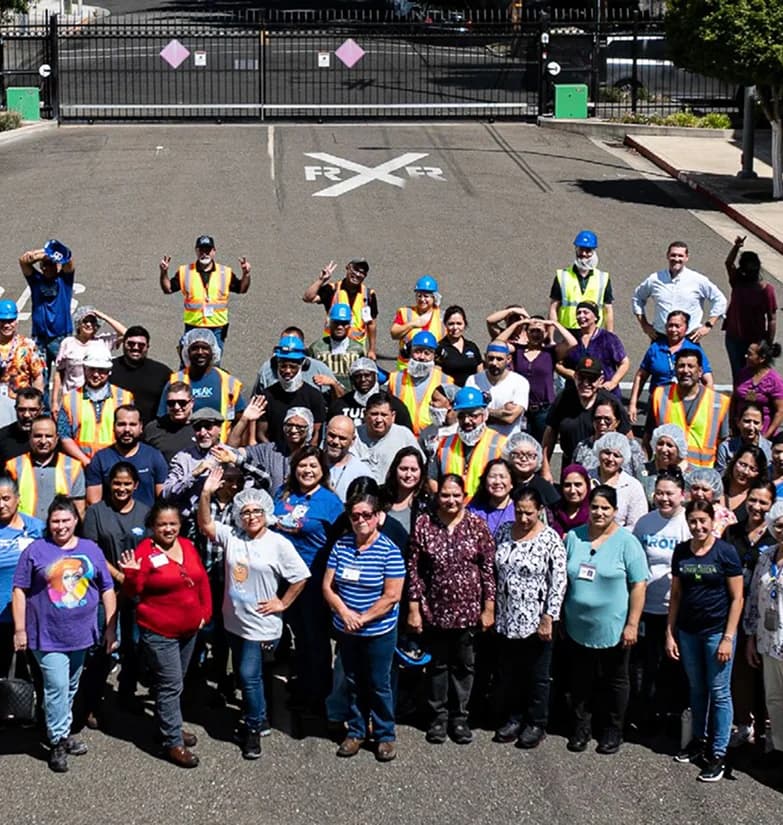
82%
[of our people] are proud to say they work at Blue Diamond1
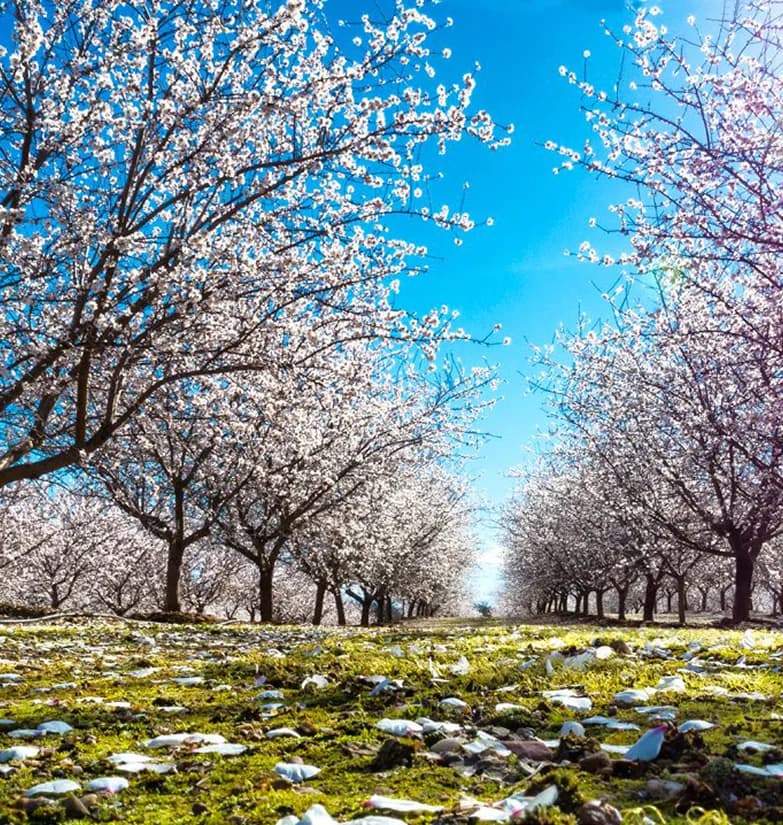
22,000
acres of cover crops were planted on our orchards in 20254
Care For Our Land
Taking care of our land means nurturing it for future generations. We’re taking a multi-pronged approach to supporting science-based stewardship practices across our cooperative2.
Through the hard work of our cooperative grower-owners, Blue Diamond has:
- Implemented one of the largest almond agriculture stewardship programs in the world3
- Supported cover cropping on 22,000 acres of orchards in 20254
- Enrolled more than 60% of member almond acreage in our Orchard Stewardship Incentive Program, and more than 20% in the Bee Friendly Farming program (BFF)
Care For Our Water
We strive to conserve, protect, and enhance water resources across our manufacturing operations. We also work with our growers to help them use water efficiently.
We are proud that responsible water use is an important consideration in our operations, especially:
- Our growers’ role in achieving the 33% reduction in water usage among all California almond growers between 1990 and the 2010s and another 15% reduced per almond from 2018 to 2022 according to the Almond Board of California5
- Our digital mapping of member orchards, used to understand our individual members’ water resilience
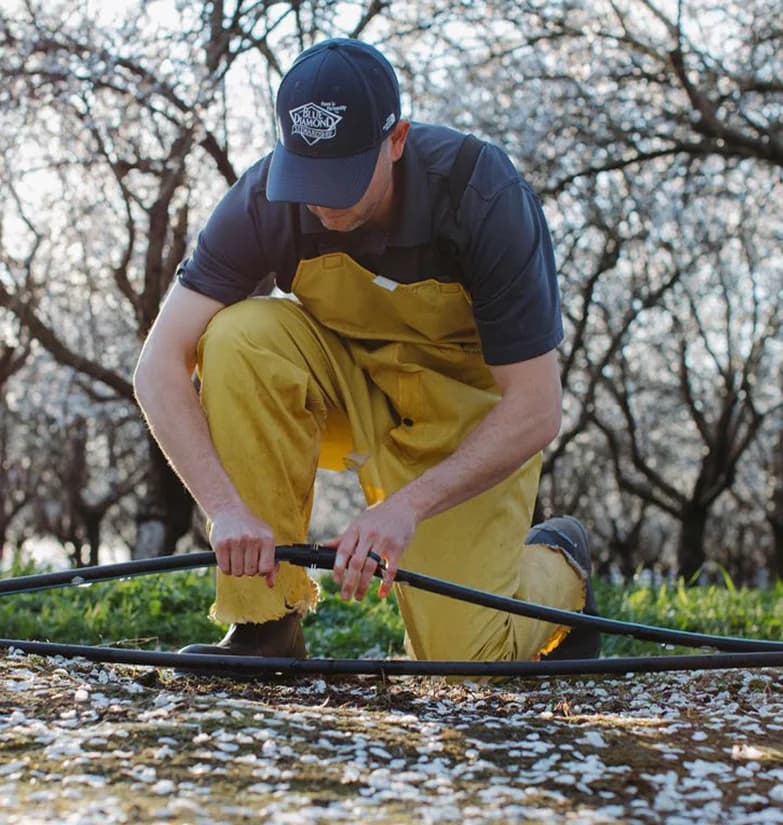
73%
of Blue Diamond almond orchards use efficient micro-irrigation systems

16,763
metric tons of organic waste repurpose
as animal feed
in 20256
Care For Our Almonds
Almonds contain more protein, calcium, fiber, vitamin E, riboflavin, and niacin than most other tree nuts. Care for Our Almonds means placing a high priority on quality and food safety to deliver you these benefits, while minimizing waste along the way.
Highlights from our efforts include:
- All three of our manufacturing sites were certified by the Safe Quality Food (SQF) Program and audited against the Sedex Members Ethical Trade Audit (SMETA) system in 2025
- Our growers sell or use almond shell and hull byproducts for secondary purposes, including animal feed and bedding
- Cosmetically blemished or broken almonds are put to good use as ingredients for products like almond flour, milk, or oils
Partnering with Customers for a Resilient Future
As a grower-owned cooperative, collaboration comes naturally to us. This approach extends to our almond ingredient and retail customers.
What could collaboration look like? One customer worked with growers to pilot their company’s project designed to support the adoption of specific farm stewardship practices they identified as “regenerative.” As a result, a participating grower was able to double his compost use, improving soil health, water retention, and reducing fertilizer needs in the process.
From working in partnership with our growers to using almonds from farms participating in the Bee Friendly Farming program in your product, we’re here to help you bring high‑quality offerings to market.
*Verified at the limited level of assurance.
1 Pulse surveys were distributed in January and April 2025 to manufacturing and corporate employees, respectively. All exempt and non-exempt BDG employees, including temporary interns, are included to participate. Contractors do not participate.
2 Blue Diamond is comprised of almost 3,000 separate independently run farms. The programs discussed in this report are voluntary and not mandatory, and some of the practices identified are attributable to only a selection of the member farms and not indicative of uniform approaches across all farming operations conducted by independent Blue Diamond grower-owners or across all almonds handled and processed by Blue Diamond Growers.
3 Extrapolated from Blue Diamond OSIP participation data as correlated to overall industry “handler size” data reported in The Almond Almanac 2025, Almond Board of California.
4 Orchard acres incentivized to plant cover crops through USDA Advancing Markets for Producers grant in fiscal 2025.
5 California Almond Stewardship Platform. Almond Orchard 2025 Goals Midpoint, SureHarvest. November 2022.
6 BDG defines organic waste as biodegradable materials from plants.